

Discover how REAC Technology uses Functional Optimization and endogenous bioelectric activity to help the body recover from stress, trauma, and disease.
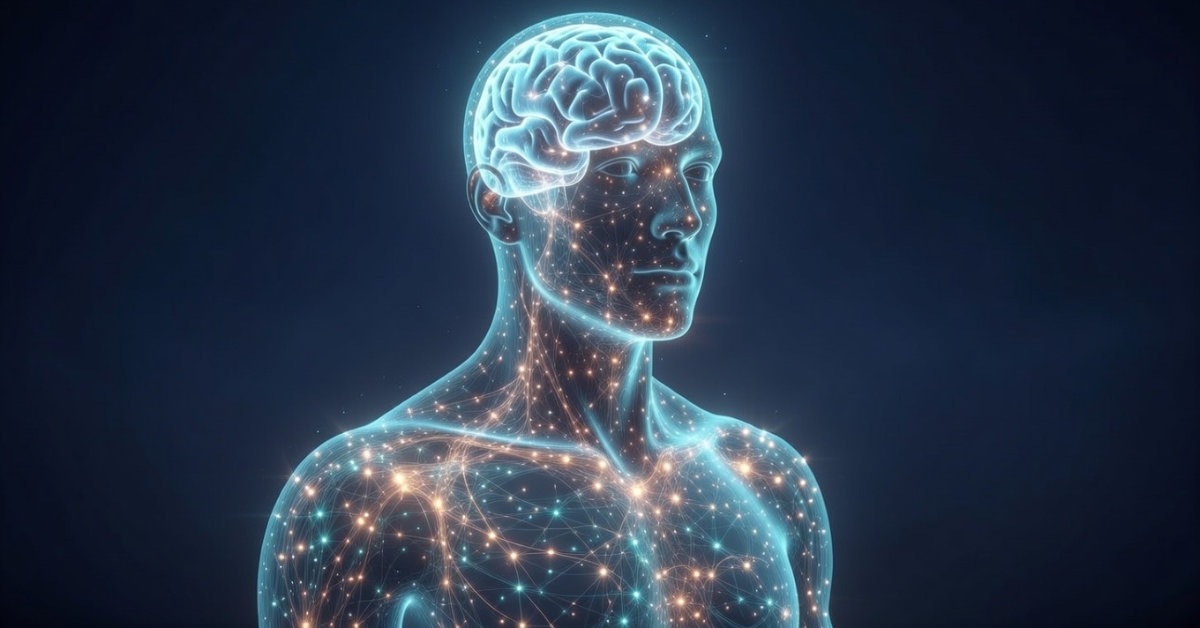
Think about what happens when a computer starts to slow down. Most of the time, there isn’t a broken hardware part. The physical machine is perfectly intact, yet everything runs poorly because there are too many open processes or system conflicts.
In the human body, something very similar happens. Often, a disease or a disorder doesn’t arise simply because something is “missing” or completely broken, but because the organism has lost its ability to manage its resources efficiently.
This brings us to the very heart of REAC Technology: the concept of Functional Optimization.
To truly understand how REAC (Radio Electric Asymmetric Conveyer) technology works, we must recall a fundamental principle of physics and biology: our body runs on electricity.
Every single cell in our body maintains an electrical potential that is absolutely crucial for internal communication and biological functions. In the scientific and clinical fields, this is known as Endogenous Bioelectric Activity.
When we are healthy, these electrical signals travel clearly, quickly, and efficiently. Our nervous system communicates perfectly with our muscles, our organs function harmoniously, and our cells repair themselves as they should.
But what happens when we experience severe stress, physical trauma, or an illness?
It is as if a sudden “interference” disrupts the signal. The communication inside the cell and between different cells becomes altered. The human body is incredibly resilient, so to survive, it adapts to this error. However, it does so by paying a high price: it develops functional disorders, chronic pain, and eventually, diseases.
This is exactly where REAC technology steps in. Thanks to its specific operating principle, the REAC device can interact with the body’s bioelectric fields in a completely non-invasive way.
It is crucial to note that REAC does not deliver electric shocks, nor does it generate heat in the tissues. Instead, it sends an extremely weak radio-electric signal that acts much like a tuning fork. It provides the body’s cells with a stable, clear reference point, allowing them to reorient their electrical charges and spontaneously recover a more balanced and healthy functionality.
What does this mean in daily clinical practice? It means moving from dysfunction to true Optimization. REAC technology is applied in two main biological areas:
Ultimately, the most important takeaway is this: REAC technology never forces the organism to do something unnatural.
Its sole purpose is to optimize the biological functions that have been altered due to stress, aging, or pathologies, allowing the body to recover its best possible state of health at that given moment.

Dr. Vania Fontani MD, PhD, is a prominent figure in the field of regenerative medicine and neurobiological modulation.
She has dedicated her career to research and the development of innovative technologies for human well-being.
Currently, Dr. Fontani holds the position of Scientific Director at the Rinaldi Fontani Institute in Florence, where she leads the Department of Regenerative Medicine.
In collaboration with Prof. Salvatore Rinaldi, she co-developed the REAC® (Radio Electric Asymmetric Conveyer) technology, a non-invasive methodology aimed at modulating endogenous bioelectric activity to promote health and well-being.
Her research work is documented in over 60 scientific publications, with a significant impact in the field of neuromodulation and regenerative medicine.
Her experience and expertise make her an ideal speaker for international events focused on innovation and longevity
Learn more:
• Publications: PubMed – Rinaldi S, Fontani V

Physician and researcher, pioneer in neurobiological modulation, regenerative medicine, and anti-senescence therapies Scientific Director – Rinaldi Fontani Institute, Florence, Italy
ORCID: 0000-0002-8961-6316
Profile and Mission
Salvatore Rinaldi is an internationally recognized innovator for his groundbreaking
contribution to the study and clinical application of neurobiological modulation using
asymmetrically conveyed radio-electric signals (REAC). His work has redefined the
boundaries of regenerative medicine and longevity, demonstrating how optimizing
endogenous bioelectrical activity can promote cellular reprogramming, recovery of
compromised functions, and the prevention of age-related decline.
Research Milestones
Rinaldi’s research has opened new frontiers in the understanding and treatment of
neurodegenerative diseases and cellular aging processes. Among his most significant
contributions:
Regenerative Medicine:
Anti-Senescence and Longevity:
Neurodegenerative Diseases – Efficacy of REAC Technology in Alzheimer’s and
Neurodegeneration Models:
Scientific Vision
Salvatore Rinaldi’s work demonstrates that bioelectrical modulation is not merely a
theoretical concept, but a concrete and reproducible therapeutic strategy to counteract
aging, support cellular repair processes, and prevent tissue degeneration.
Learn more:
• ORCID Profile: 0000-0002-8961-6316
• Publications: PubMed – Rinaldi S, Fontani V